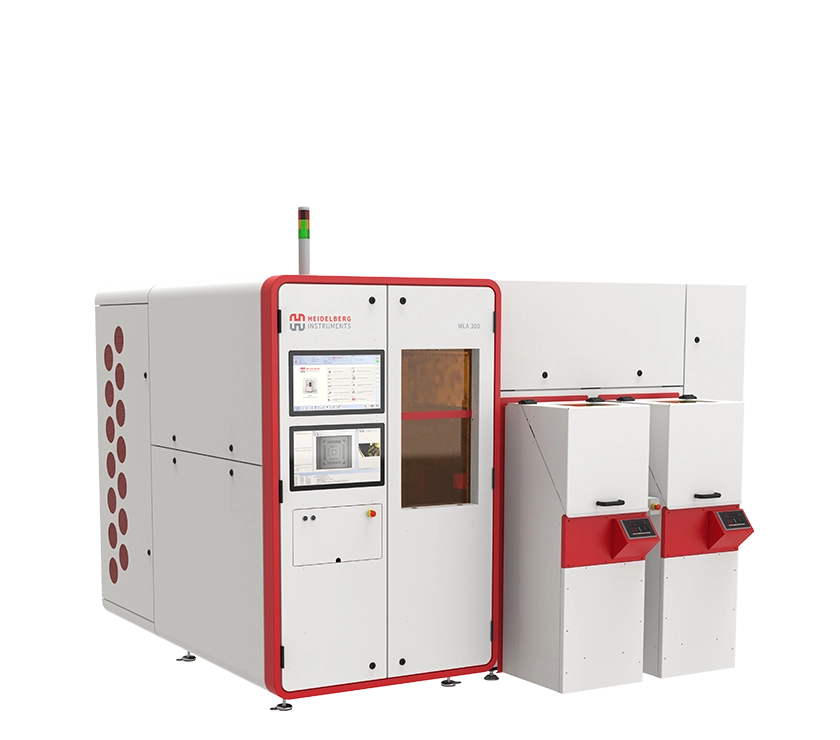

MLA 300 Maskless Aligner
- Maskless Aligner
Optimized for flexible industrial production with highest precision and seamless integration into industrial production lines.
Description
Semiconductor lithography is a fundamental process in the development and fabrication of integrated circuits, sensors, power electronics, advanced packaging, MEMS, and other microelectronic devices. It uses light to pattern photoresist-coated substrates, defining functional structures such as conductive paths, contact areas, electrodes, device layers, vias, and interconnects.
Conventional photolithography transfers these patterns through physical photomasks. This approach is well established and highly cost-effective for standardized, high-volume semiconductor manufacturing. However, every design modification may require a new mask, adding tooling costs, lead time, and complexity to the development process.
Maskless lithography, also known as direct-write lithography, transfers digital layout data directly onto the resist-coated substrate. Because the exposure pattern is generated digitally, designs can be modified without manufacturing a new physical mask. This enables faster iterations, greater patterning flexibility, and more economical processing for semiconductor research, process development, prototyping, pilot lines, and high-mix production.
For processes that still rely on conventional mask-based exposure, selected Heidelberg Instruments systems can also be used to manufacture high-quality photomasks. This gives users the flexibility to choose between direct patterning of the substrate and in-house photomask fabrication, depending on process requirements, production volume, and existing equipment.
Learn more about our solutions for photomask production.
Semiconductor development often involves complex, multilayer fabrication processes. Each additional lithography layer may require another photomask, accurate alignment to existing structures, and extensive process optimization.
Development and production teams must therefore address several key challenges:
Heidelberg Instruments’ maskless laser lithography technology provides the flexibility required to address these challenges. Instead of waiting for a new photomask, users can update the digital layout and proceed directly to the next exposure.
Depending on the selected system and application requirements, maskless lithography can provide:
Maskless lithography creates a direct link between digital device design and physical semiconductor fabrication. A typical workflow begins with a CAD layout, followed by its conversion into exposure data and the direct patterning of a resist-coated substrate.
This digital workflow allows engineers to compare multiple device designs and process parameters on a single substrate, adapt layouts to specific dies, samples, or existing features, and reduce the turnaround time between design changes and physical experiments.
On selected systems, Draw Mode provides an additional level of flexibility by allowing individual features to be created directly on the live microscope image of the substrate. This can be useful for adding markers, labels, electrical connections, or other application-specific structures without having to create a complete new layout.
Heidelberg Instruments’ maskless lithography solutions can support a broad range of semiconductor and microelectronics applications, from early-stage research and process development to pilot production and specialized manufacturing.
Explore our microelectronics and nanoelectronics applications to learn more about related lithography processes and technologies.
Heidelberg Instruments provides a broad portfolio of lithography solutions for semiconductor research, development, prototyping, pilot production, and industrial manufacturing. The portfolio includes maskless aligners, direct laser writing systems, and photomask production tools for binary, grayscale, high-aspect-ratio, and multilayer lithography.
With different system platforms, exposure concepts, wavelengths, write modes, substrate-handling options, and automation levels, users can select a solution suited to their required resolution, throughput, resist process, substrate format, and production environment.
Depending on the application, the portfolio includes:
Together, these technologies support semiconductor workflows ranging from individual research samples and small wafer pieces to automated wafer processing and production-oriented manufacturing.
Heidelberg Instruments combines direct-write flexibility with scalable lithography solutions for different stages of the semiconductor manufacturing workflow. Users can start with rapid maskless prototyping, optimize their process, and transition to more automated or production-oriented systems as requirements for throughput, substrate size, and process integration increase.
This range of solutions helps semiconductor manufacturers, research institutes, and technology developers reduce iteration time, manage high-mix processes, and select the most appropriate lithography approach for each fabrication step.
Discover how Heidelberg Instruments’ lithography systems can help accelerate semiconductor development, simplify design iterations, and provide the flexibility needed for demanding microfabrication processes.
Explore our photomask solutions or find the right lithography system for your application.
Requirements
Solutions
Semiconductor lithography is a fundamental process in the development and fabrication of integrated circuits, sensors, power electronics, advanced packaging, MEMS, and other microelectronic devices. It uses light to pattern photoresist-coated substrates, defining functional structures such as conductive paths, contact areas, electrodes, device layers, vias, and interconnects.
Conventional photolithography transfers these patterns through physical photomasks. This approach is well established and highly cost-effective for standardized, high-volume semiconductor manufacturing. However, every design modification may require a new mask, adding tooling costs, lead time, and complexity to the development process.
Maskless lithography, also known as direct-write lithography, transfers digital layout data directly onto the resist-coated substrate. Because the exposure pattern is generated digitally, designs can be modified without manufacturing a new physical mask. This enables faster iterations, greater patterning flexibility, and more economical processing for semiconductor research, process development, prototyping, pilot lines, and high-mix production.
For processes that still rely on conventional mask-based exposure, selected Heidelberg Instruments systems can also be used to manufacture high-quality photomasks. This gives users the flexibility to choose between direct patterning of the substrate and in-house photomask fabrication, depending on process requirements, production volume, and existing equipment.
Learn more about our solutions for photomask production.
Semiconductor development often involves complex, multilayer fabrication processes. Each additional lithography layer may require another photomask, accurate alignment to existing structures, and extensive process optimization.
Development and production teams must therefore address several key challenges:
Heidelberg Instruments’ maskless laser lithography technology provides the flexibility required to address these challenges. Instead of waiting for a new photomask, users can update the digital layout and proceed directly to the next exposure.
Depending on the selected system and application requirements, maskless lithography can provide:
Maskless lithography creates a direct link between digital device design and physical semiconductor fabrication. A typical workflow begins with a CAD layout, followed by its conversion into exposure data and the direct patterning of a resist-coated substrate.
This digital workflow allows engineers to compare multiple device designs and process parameters on a single substrate, adapt layouts to specific dies, samples, or existing features, and reduce the turnaround time between design changes and physical experiments.
On selected systems, Draw Mode provides an additional level of flexibility by allowing individual features to be created directly on the live microscope image of the substrate. This can be useful for adding markers, labels, electrical connections, or other application-specific structures without having to create a complete new layout.
Heidelberg Instruments’ maskless lithography solutions can support a broad range of semiconductor and microelectronics applications, from early-stage research and process development to pilot production and specialized manufacturing.
Explore our microelectronics and nanoelectronics applications to learn more about related lithography processes and technologies.
Heidelberg Instruments provides a broad portfolio of lithography solutions for semiconductor research, development, prototyping, pilot production, and industrial manufacturing. The portfolio includes maskless aligners, direct laser writing systems, and photomask production tools for binary, grayscale, high-aspect-ratio, and multilayer lithography.
With different system platforms, exposure concepts, wavelengths, write modes, substrate-handling options, and automation levels, users can select a solution suited to their required resolution, throughput, resist process, substrate format, and production environment.
Depending on the application, the portfolio includes:
Together, these technologies support semiconductor workflows ranging from individual research samples and small wafer pieces to automated wafer processing and production-oriented manufacturing.
Heidelberg Instruments combines direct-write flexibility with scalable lithography solutions for different stages of the semiconductor manufacturing workflow. Users can start with rapid maskless prototyping, optimize their process, and transition to more automated or production-oriented systems as requirements for throughput, substrate size, and process integration increase.
This range of solutions helps semiconductor manufacturers, research institutes, and technology developers reduce iteration time, manage high-mix processes, and select the most appropriate lithography approach for each fabrication step.
Discover how Heidelberg Instruments’ lithography systems can help accelerate semiconductor development, simplify design iterations, and provide the flexibility needed for demanding microfabrication processes.
Explore our photomask solutions or find the right lithography system for your application.


Optimized for flexible industrial production with highest precision and seamless integration into industrial production lines.
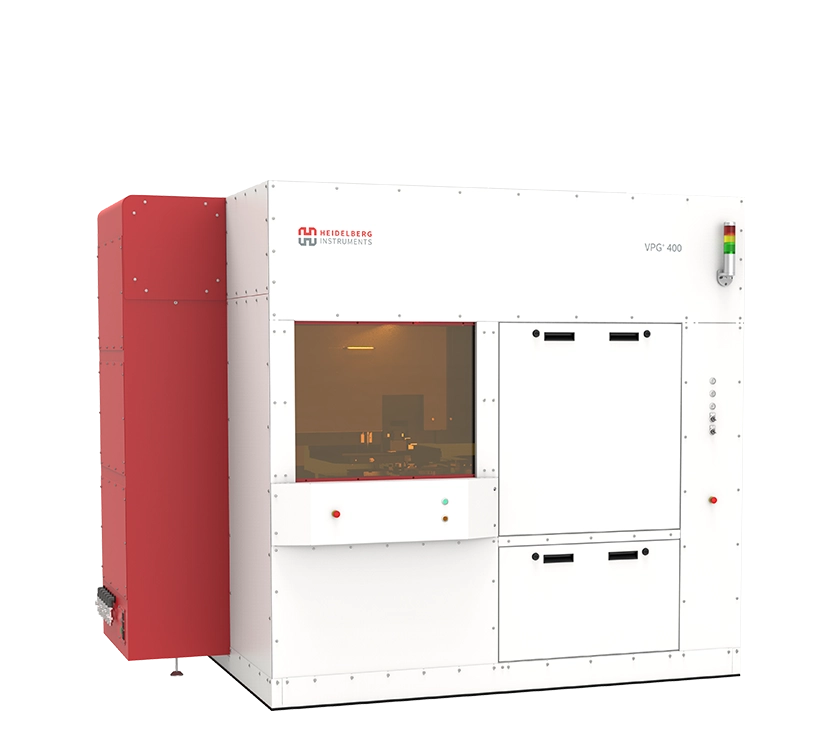
Powerful production tools for standard photomasks and microstructures in i-line resists.
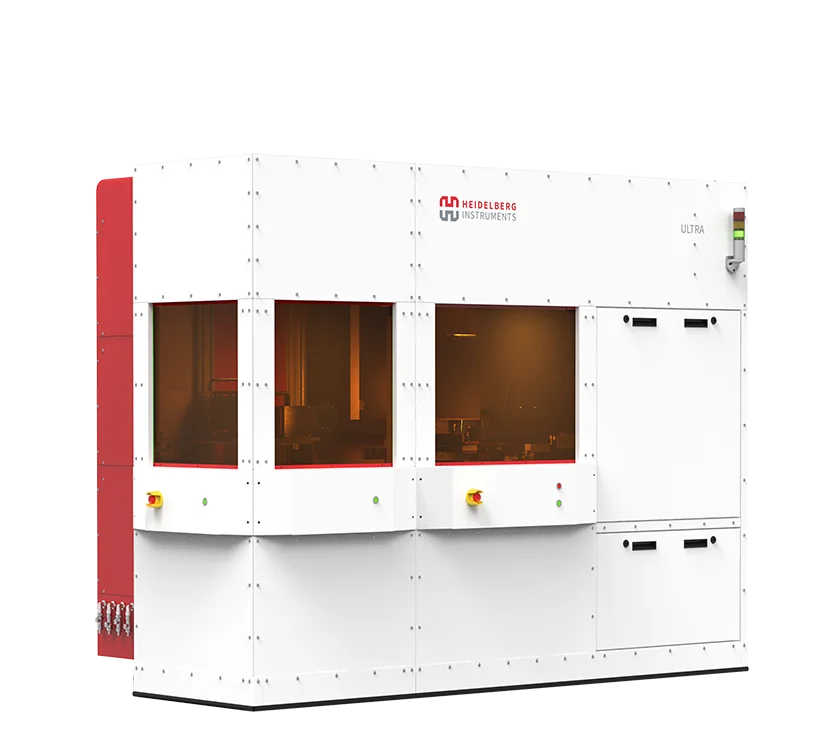
Maskless direct imager for high-accuracy and high-resolution microstructures.
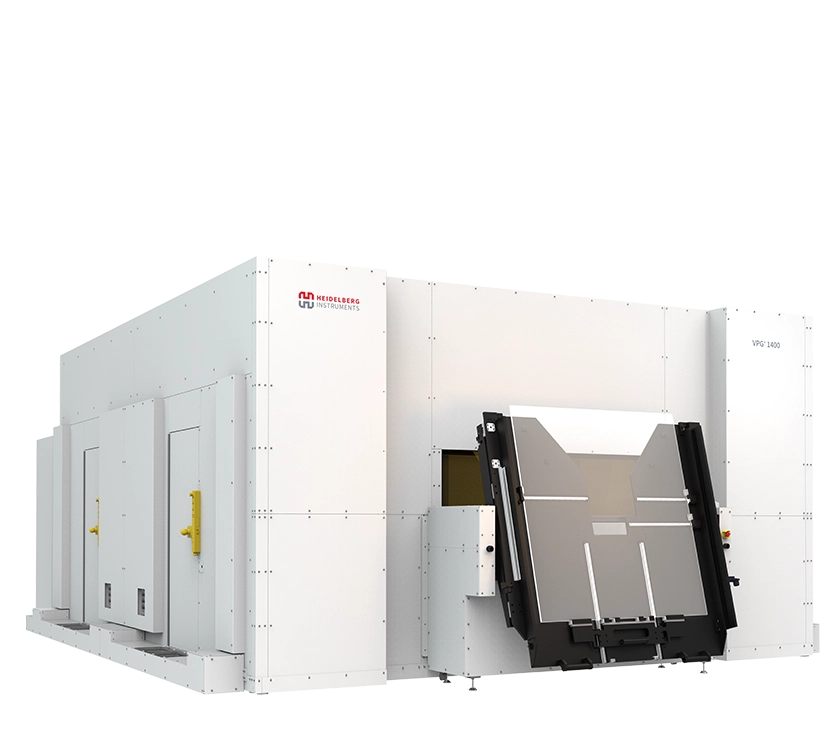
A tool specifically designed to produce mature semiconductor photomasks.
Follow us on social media to benefit
from a range of useful resources.