Thermal Scanning Probe Lithography

Direct Writing on the Nanoscale

  • Description

  • Thermal Scanning Probe Lithography (t-SPL) is an advanced nanoscale patterning and nanofabrication technology that enables direct writing of high-resolution structures without the need for masks, electron beams, or complex resist processing.

    In this form of scanning probe lithography, an ultra-sharp heated tip locally modifies or sublimates a thermally sensitive resist. By precisely controlling the temperature and position of the probe, nanoscale features can be written with extremely high accuracy and reproducibility.

    Because the same probe can also scan the surface in imaging mode, patterning and inspection can be performed on the same system, providing immediate feedback and precise control over the fabricated nanostructures.

    The NanoFrazor Principle

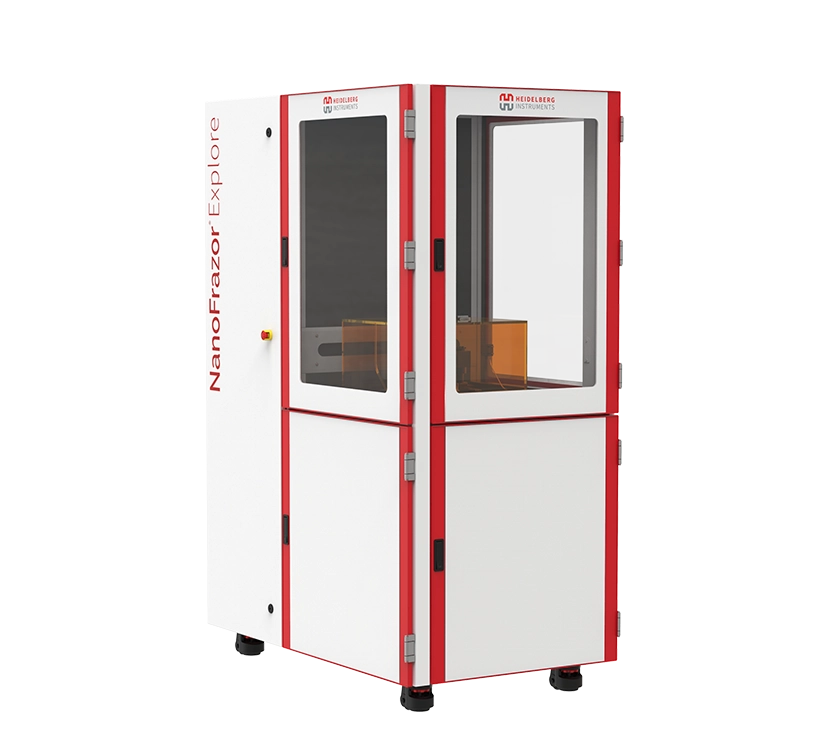
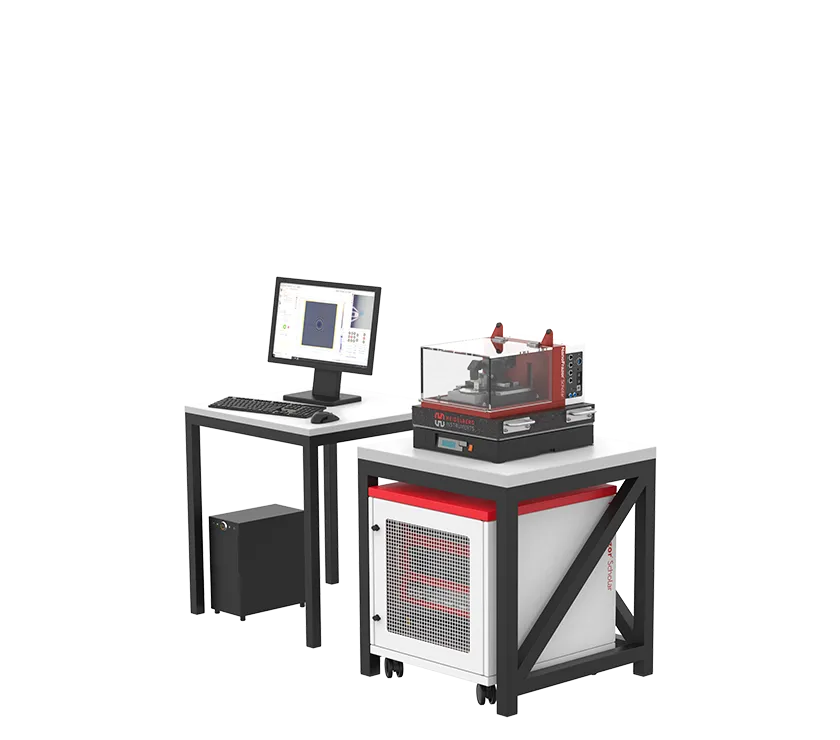
    Thermal scanning probe lithography forms the core operating principle of the NanoFrazor technology developed by Heidelberg Instruments.

    Using the NanoFrazor system, nanoscale patterns are created by locally removing resist material with a heated probe tip, enabling highly controlled three-dimensional and high-resolution surface patterning. After the lithography step, the patterned resist can be transferred into the underlying material using standard nanofabrication processes such as:

    • Lift-off
    • Dry or wet etching
    • Deposition processes

    This compatibility with established microfabrication and nanofabrication workflows makes thermal scanning probe lithography a versatile tool for advanced device fabrication and research.

    From Memory Research to Nanofabrication

    The origins of thermal scanning probe lithography lie in research conducted at IBM Research – Zurich as part of the pioneering Millipede Project. Initially developed as a concept for ultra-high-density data storage, the technology evolved into a powerful direct-write nanolithography method capable of fabricating complex nanoscale structures.

    Today, this technology is commercially available through the NanoFrazor platform from Heidelberg Instruments and is widely used in nanoscience, nanotechnology research, and advanced nanofabrication applications.

    Advantages of Thermal Scanning Probe Lithography

    Compared with many conventional nanolithography techniques, thermal scanning probe lithography offers several important advantages:

    • High-resolution nanoscale patterning
    • Direct-write lithography without photomasks
    • Simultaneous patterning and imaging
    • No wet resist development required
    • No proximity effect corrections
    • Operation without vacuum systems

    These characteristics simplify the nanofabrication workflow and enable precise control over feature geometry and placement.

    Versatile Nanoscale Fabrication

    Because t-SPL is compatible with standard pattern transfer techniques and a wide range of substrate materials, it enables the fabrication of structures for many applications, including:

    By combining high-resolution nanolithography with direct surface inspection, thermal scanning probe lithography provides a powerful platform for nanoscale research and device development.

Thermal Scanning Probe Lithography (t-SPL) is an advanced nanoscale patterning and nanofabrication technology that enables direct writing of high-resolution structures without the need for masks, electron beams, or complex resist processing.

In this form of scanning probe lithography, an ultra-sharp heated tip locally modifies or sublimates a thermally sensitive resist. By precisely controlling the temperature and position of the probe, nanoscale features can be written with extremely high accuracy and reproducibility.

Because the same probe can also scan the surface in imaging mode, patterning and inspection can be performed on the same system, providing immediate feedback and precise control over the fabricated nanostructures.

The NanoFrazor Principle

Thermal scanning probe lithography forms the core operating principle of the NanoFrazor technology developed by Heidelberg Instruments.

Using the NanoFrazor system, nanoscale patterns are created by locally removing resist material with a heated probe tip, enabling highly controlled three-dimensional and high-resolution surface patterning. After the lithography step, the patterned resist can be transferred into the underlying material using standard nanofabrication processes such as:

  • Lift-off
  • Dry or wet etching
  • Deposition processes

This compatibility with established microfabrication and nanofabrication workflows makes thermal scanning probe lithography a versatile tool for advanced device fabrication and research.

From Memory Research to Nanofabrication

The origins of thermal scanning probe lithography lie in research conducted at IBM Research – Zurich as part of the pioneering Millipede Project. Initially developed as a concept for ultra-high-density data storage, the technology evolved into a powerful direct-write nanolithography method capable of fabricating complex nanoscale structures.

Today, this technology is commercially available through the NanoFrazor platform from Heidelberg Instruments and is widely used in nanoscience, nanotechnology research, and advanced nanofabrication applications.

Advantages of Thermal Scanning Probe Lithography

Compared with many conventional nanolithography techniques, thermal scanning probe lithography offers several important advantages:

  • High-resolution nanoscale patterning
  • Direct-write lithography without photomasks
  • Simultaneous patterning and imaging
  • No wet resist development required
  • No proximity effect corrections
  • Operation without vacuum systems

These characteristics simplify the nanofabrication workflow and enable precise control over feature geometry and placement.

Versatile Nanoscale Fabrication

Because t-SPL is compatible with standard pattern transfer techniques and a wide range of substrate materials, it enables the fabrication of structures for many applications, including:

By combining high-resolution nanolithography with direct surface inspection, thermal scanning probe lithography provides a powerful platform for nanoscale research and device development.

Related images

suitable Systems

NanoFrazor tabletop

NanoFrazor Nanolithography Tool

  • Thermal Scanning Probe Lithography System

Versatile & modular tool combining Thermal Scanning Probe Lithography, Direct Laser Sublimation, and advanced automation for cutting-edge R&D. 

Scroll to Top