High Aspect Ratio Microstructures

Fabricating High-Aspect-Ratio Microstructures in Thick Photoresists

  • Description

  • Many applications in MEMS, microfluidics, micro-optics, and advanced packaging require microstructures that combine small lateral dimensions with significant resist thickness. Achieving these high aspect ratios while maintaining vertical sidewalls and dimensional accuracy is essential for reliable device performance and subsequent processing steps.

    Our direct-write lithography systems can directly expose thick layers of photoresist, including SU-8 and other negative resists, while maintaining excellent sidewall verticality. By optimizing the entrance pupil of the projection optics, the depth of focus (DoF) is increased, enabling thick-resist exposure with high pattern fidelity and aspect ratios of up to 40:1.

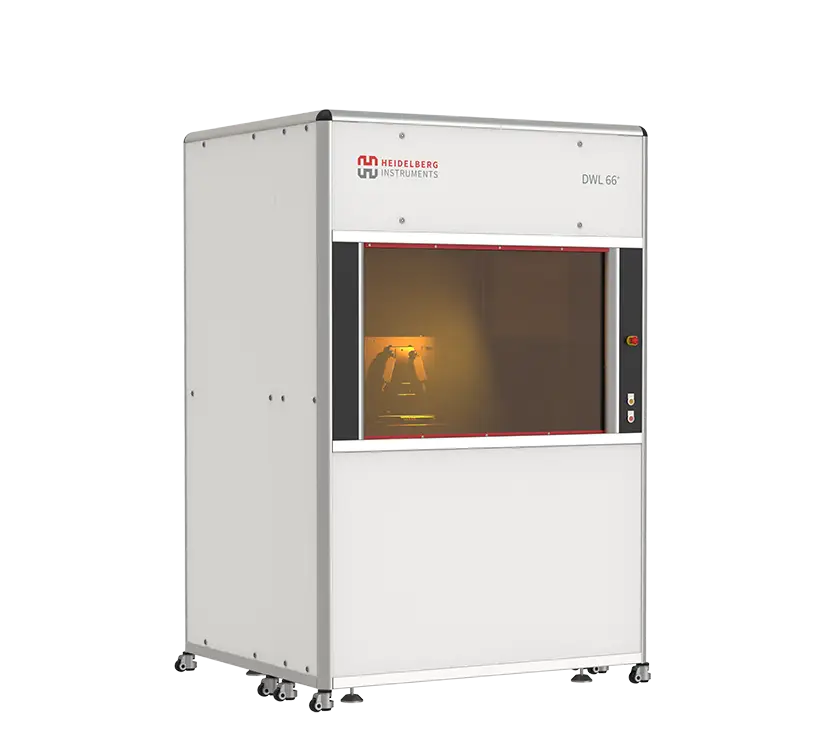
    For applications requiring even smaller structures or three-dimensional surface topographies, our DWL 66+ Laser Lithography System combines high-resolution lithography with advanced grayscale capabilities. With 65,536 grayscale levels, it produces outstanding surface quality in photoresists up to 150 µm thick. For even higher aspect ratios, high-resolution patterns can be transferred into functional substrates using reactive ion etching (RIE). This etch amplification enables structures with ultra-high lateral resolution and even higher effective aspect ratios.

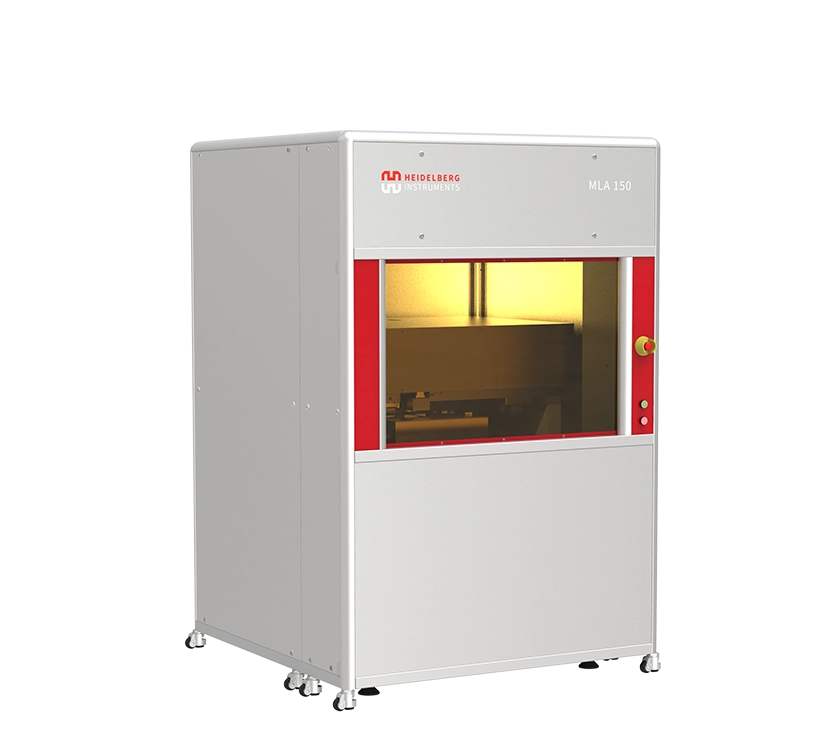
    Beyond conventional high-aspect-ratio structures, our MLA 150 and MLA 300 Maskless Aligners also enable the fabrication of complex three-dimensional microstructures in negative-tone photoresists through precise local dose control. Suspended features, enclosed microfluidic channels, lattice structures, and other advanced geometries can be fabricated in a single maskless lithography process without substrate reloading or realignment. This approach significantly simplifies the fabrication of complex microstructures while reducing process complexity.

    Learn more about this approach in our application note: Single-Step 3D Patterning of Negative Resists via Maskless Aligner.

Many applications in MEMS, microfluidics, micro-optics, and advanced packaging require microstructures that combine small lateral dimensions with significant resist thickness. Achieving these high aspect ratios while maintaining vertical sidewalls and dimensional accuracy is essential for reliable device performance and subsequent processing steps.

Our direct-write lithography systems can directly expose thick layers of photoresist, including SU-8 and other negative resists, while maintaining excellent sidewall verticality. By optimizing the entrance pupil of the projection optics, the depth of focus (DoF) is increased, enabling thick-resist exposure with high pattern fidelity and aspect ratios of up to 40:1.

For applications requiring even smaller structures or three-dimensional surface topographies, our DWL 66+ Laser Lithography System combines high-resolution lithography with advanced grayscale capabilities. With 65,536 grayscale levels, it produces outstanding surface quality in photoresists up to 150 µm thick. For even higher aspect ratios, high-resolution patterns can be transferred into functional substrates using reactive ion etching (RIE). This etch amplification enables structures with ultra-high lateral resolution and even higher effective aspect ratios.

Beyond conventional high-aspect-ratio structures, our MLA 150 and MLA 300 Maskless Aligners also enable the fabrication of complex three-dimensional microstructures in negative-tone photoresists through precise local dose control. Suspended features, enclosed microfluidic channels, lattice structures, and other advanced geometries can be fabricated in a single maskless lithography process without substrate reloading or realignment. This approach significantly simplifies the fabrication of complex microstructures while reducing process complexity.

Learn more about this approach in our application note: Single-Step 3D Patterning of Negative Resists via Maskless Aligner.

Related images

Suitable Systems

Scroll to Top